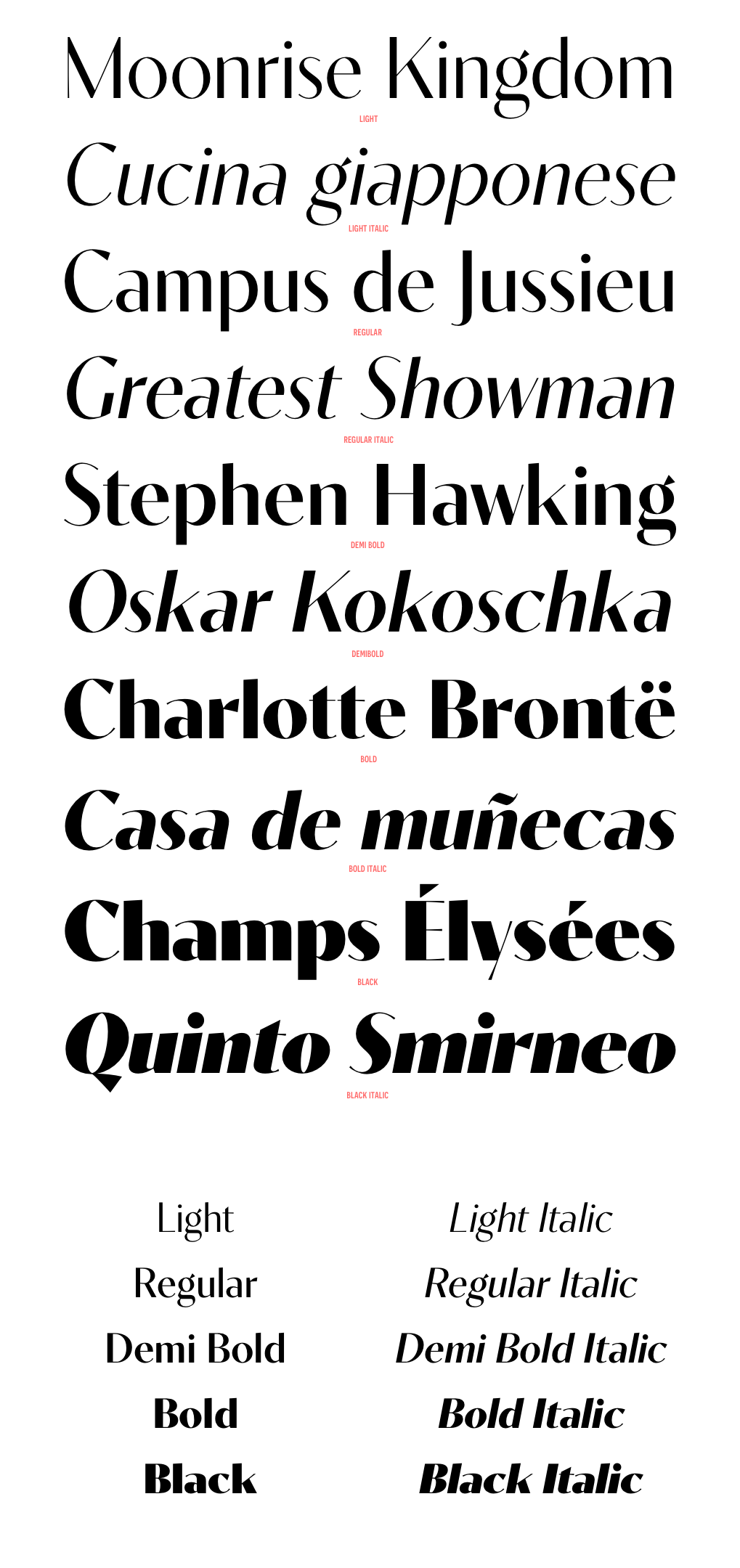
Contralto is a high contrast sans-serif font family, crafted to look elegant but contemporary thanks to soft humanist shapes mixed with sharp geometric details.
Contralto comes in 40 styles: 5 weights × italics × 4 optical sizes, to help optimising contrast and readability. However, you can also use them to fine tune the mood of your graphical composition.
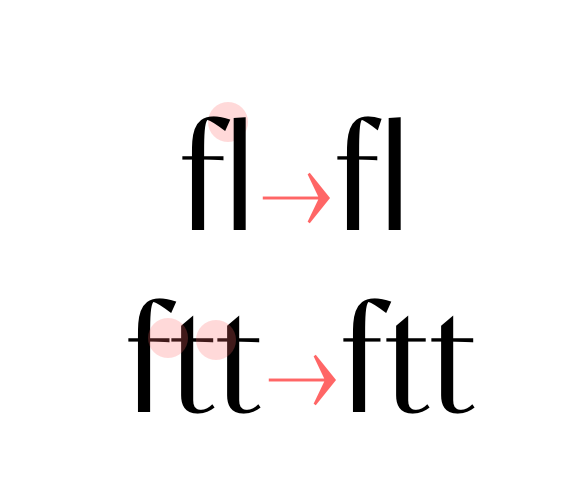
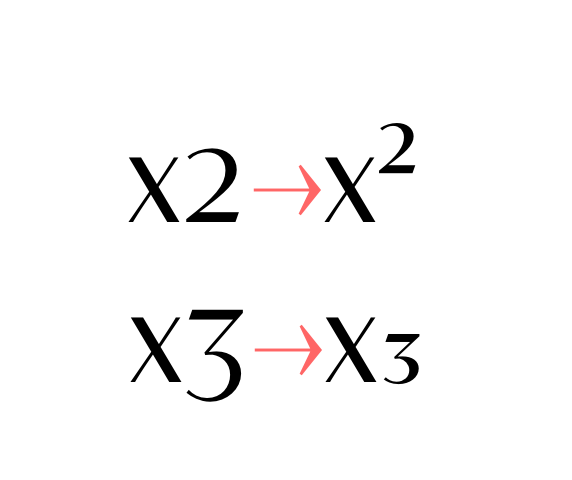
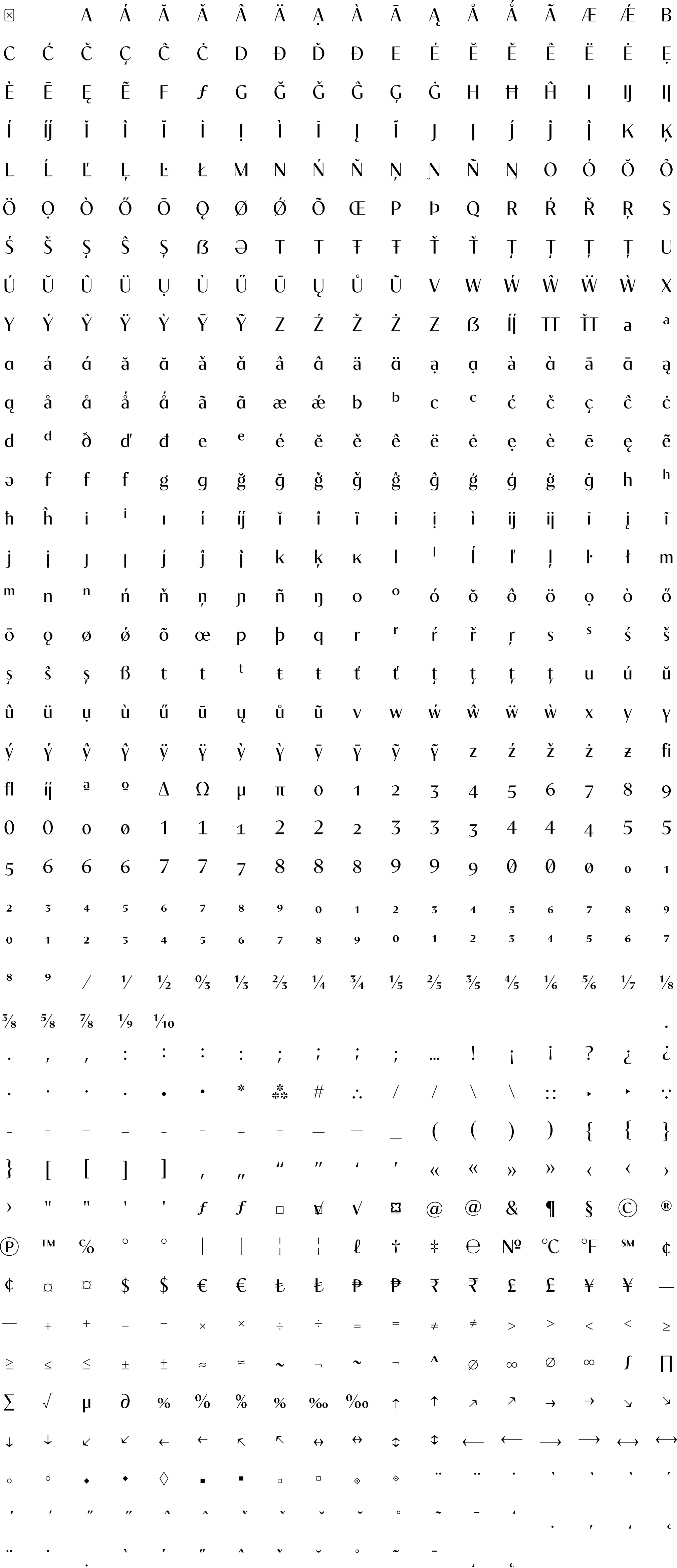
Contralto’s generous character set and Opentype features let you meet the most demanding layout needs and lets your creativity fly!
Download the Contralto Specimen --> 
Chantal Del Sol Icarus Fallenpdf [cracked] -
When these utopian projects fail (the fall), humanity is forced to confront its limitations, its need for community, and the realities of human nature. 3. "Icarus Fallen" in the Contemporary World
The tension between global identity and local roots.
Moving away from technological utopianism toward a more human-centered, sustainable development.
Icarus represents human ambition, ingenuity, and the refusal to accept natural or divine limitations. chantal del sol icarus fallenpdf
Fallen Icarus is terrified of being burned again. As a result, late-modern societies obsess over safety, comfort, and the elimination of all risks. Delsol explains that this reveals a fundamental refusal to accept the tragic dimension of human life—including suffering, failure, and mortality. 4. Reduction to Biological Survival
: In the absence of objective truth, morality has become a matter of sentimentality and "indignation," leading to a culture of complacency and political correctness.
We must renounce the desire to be gods and accept our flaws, mortality, and boundaries. When these utopian projects fail (the fall), humanity
In Icarus Fallen , Chantal Delsol argues that post-utopian modern society suffers from existential confusion, having rejected objective truths in favor of a "morality of sentimentality". The work critiques the "sacralization" of rights and calls for a re-embrace of human limits and a "tragic sense of life". Detailed analysis of the text is available via The Denver Journal .
Often mistakenly spelled as "Chantal del Sol" due to her name's phonetic similarity, (also known as Chantal Millon-Delsol) is a distinguished French philosopher, political historian, and novelist. Born in Paris on April 16, 1947, Delsol is an alumnus of the prestigious University of Paris X-Nanterre and a professor of philosophy at the University of Marne-La-Vallée. Her intellectual stature is underscored by her election to the Académie des Sciences Morales et Politiques (the Academy of Moral and Political Sciences), one of the most elite intellectual institutions in France.
As Delsol frames it, for the last two centuries, Western society believed it could fly—powered by the promise of inevitable progress, utopian ideologies, and limitless social and self-transformation. We aimed for the "sun" of a perfect, rational world, where science would eliminate disease, poverty, and war. However, the 20th century delivered a brutal reckoning: two World Wars, genocides, the horrific revelations of the Gulag, and the resurgence of poverty and conflict. These "human disasters in the East" (a reference to the fall of the Soviet experiment) and the re-emergence of age-old problems in the West shattered our utopian illusions. Moving away from technological utopianism toward a more
Historically, Western civilization operated under the assumption of an objective, universal Good—rooted in transcendent truths, whether religious or philosophical. Postmodernity, suspicious of absolute truths because they were previously weaponized by totalitarian systems, replaced the Good with subjective "values."
He laughed, not unkindly. "Always the moralist."