Missjones2000 2011 Extra | Quality Repack
Missjones2000 2011 Extra | Quality Repack
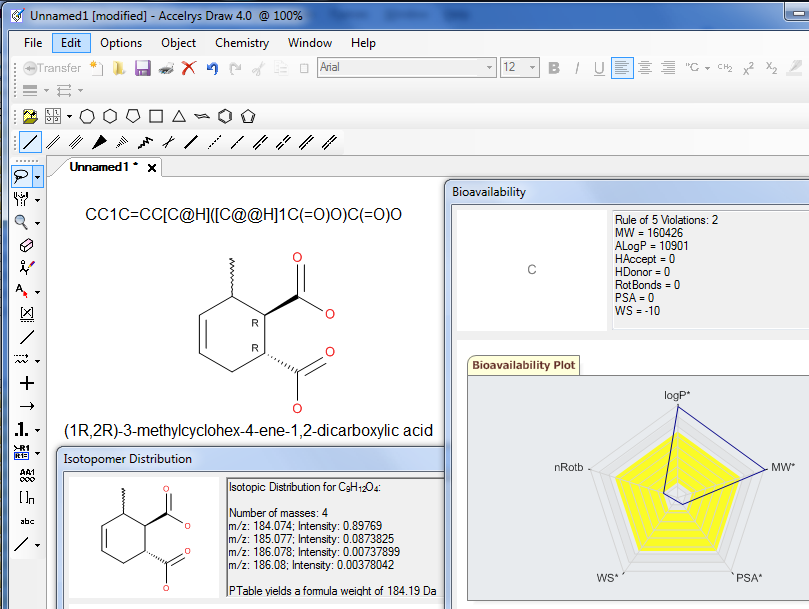 |
With the
same look-and-feel as ISIS/Draw, Accelrys Draw delivers speed and
efficiency to your chemical drawing experience.
Accelrys Draw can easily swap out existing ISIS/Draw or ChemDraw applications. |
|
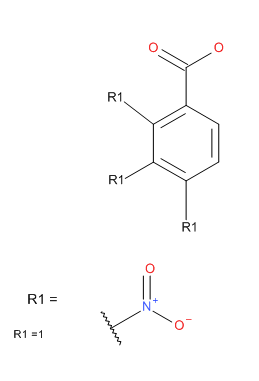
Missjones2000 2011 Extra | Quality RepackClick here for more details about Rgroups, an example, and a detailed procedure how to draw a Markush query. To draw a Markush query:
|
|
|
| Generic Structure
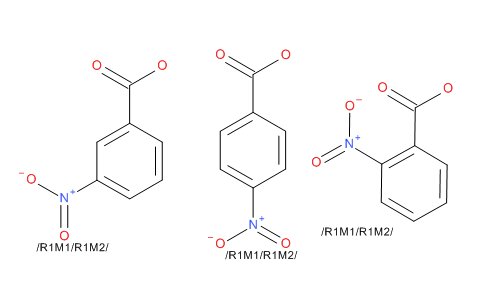
Enumerator The enumerator works against structures defined using the Rgroup tool in Accelrys Draw. In this mode you specify a scaffold with a number of Rgroup labels, then to add fragments to the Rgroup identifiers. The Add-in will calculate the complete set of structures that the Rgroups define. You can also define a generic region using the Sgroup tool. Draw the basic structure and using the Sgroup tool, drag a pair of brackets around a region that is repeated in the substance. From the dropdown select ‘generic’ for the bracket type, then select apply and exit from the dialog. Right click on one of the brackets and select the Attach Data option. In the dialog enter REPEATRANGE into the Field description box, and then enter the range in the Data box; leave the Search Operator set to none; the Tag field is optional. A contiguous range is required in the Data box, for example 3-6. A structure can contain both Rgroup definitions and Sgroup definitions, but they cannot overlap or be nested. You have the option to enumerate on to Accelrys Draw’s canvas, into an SDfile, or into an Isentris for Excel compatible spreadsheet. |
 |
|
Missjones2000 2011 Extra | Quality RepackWhen searching for older digital media collections or specific internet archives from the 2011 era, keeping your system secure should be your top priority. Obscure, multi-word search strings that promise premium or upgraded file quality can sometimes lead to unsecured file-sharing hubs or malicious advertising networks. It was a time when photographers and web developers were finding the balance between image quality and load speed, and the 2011 material reflected a sweet spot in that evolution. The primary entity behind the phrase is The Adventures of Miss Jones , a long-running British internet project and subscription website launched in the late 1990s and early 2000s. missjones2000 2011 extra quality The primary anchor of this phrase points toward The Adventures of Miss Jones , a distinct, long-running web platform dedicated to vintage British humor. Operating under the domain missjones2000.com , the site intentionally mimics the style, aesthetics, and comedic boundaries of 1950s BBC broadcasts, alongside classic "Carry On" and Benny Hill-style cheeky humor. The existence of keywords like "missjones2000 2011 extra quality" highlights the complex dynamics of online content creation and consumption. It underscores the importance of quality, uniqueness, and specificity in an environment where information is abundant and attention is scarce. When searching for older digital media collections or To begin our investigation, let's dissect the keyword into its constituent parts. "Missjones2000" appears to be a username or a handle, possibly derived from a combination of a person's name and the year 2000. The addition of "2011" suggests a temporal reference, potentially indicating a specific event, upload, or creation date. Lastly, the phrase "extra quality" implies a level of excellence or superiority, which could relate to content, production value, or overall experience. Preserving such files is an act of . It ensures that the creative work from this internet era is not lost to time or degraded by repeated re-encoding. This is especially important for niche content that might not be widely available on major streaming platforms. For those passionate about the history of digital media, possessing a carefully curated digital archive is a way of holding onto a piece of internet history that might otherwise have been forgotten. The primary entity behind the phrase is The Yet, it was in these moments of vulnerability that Maya discovered her true strength. She realized that "extra quality" wasn't just about the end product but about the journey itself—the late nights, the experiments, the failures, and the learning. It was about connecting with others who shared her passion, creating a community that uplifted and inspired one another. Before the absolute dominance of centralized streaming platforms, web content was primarily distributed via dedicated specialty forums, torrent indexers, and cloud storage providers of the era (such as Megaupload, RapidShare, and MediaFire). Content tagged with specific creator names allowed community members to track reliable uploaders. 3. The Preservation of Digital Artifacts |
http://accelrys.com/products/informatics/cheminformatics/draw/add-ins.html | |
Chemical Drawing Programs – The Comparison of Accelrys (Accelrys) Draw, ChemDraw, DrawIt, ACD/ChemSketch and Chemistry 4-D DrawUniversity of Debrecen, POB 70, H-4010 Debrecen, Hungary, e-mail: Last major update : 1.11.2011 If you have any comment, do not hesitate to contact the author at the above adress. |
http://dragon.klte.hu/~gundat/rajzprogramok/dprog.html |